Modern HVAC equipment depends on strong, repeatable sheet metal assemblies. Manufacturers need to attach studs, pins, and other fastening components without slowing production or damaging the surrounding material. Northland Fastening Systems helps manufacturers select and apply reliable fastening solutions for demanding production environments.
Stud welding HVAC applications can use different welding processes based on material thickness, stud size, production speed, and required joint strength. Two widely used options are CD Studs and Stud Welding Processes using drawn arc technology. Each process creates a secure connection, but each one works differently.
Therefore, understanding the difference helps HVAC manufacturers choose the right method for cabinets, panels, housings, brackets, ducts, and other sheet metal components.
What Is Capacitive Discharge Stud Welding?
Capacitive discharge, commonly called CD welding, uses stored electrical energy to create a fast weld between a stud and a metal surface. The equipment releases that energy through the stud, which creates a small arc and melts the contact area.
Next, the stud moves into the prepared surface and forms the weld.
CD welding works particularly well with thinner sheet metal. The process produces a small heat-affected area, so manufacturers can reduce the risk of distortion, burn-through, or visible damage on the opposite side of the sheet.
As a result, CD Studs can support applications where appearance, speed, and controlled heat input matter.
Common CD Stud Applications
Manufacturers can use CD studs for:
- HVAC panels
- Sheet metal enclosures
- Electrical cabinets
- Thin-gauge brackets
- Insulation attachment points
- Covers and housings
- Light-duty mounting applications
- Components requiring fast repetitive fastening
Moreover, CD welding can provide a clean production method because operators can place studs without drilling holes or using separate mechanical fasteners.
What Are Drawn Arc Stud Welding Processes?
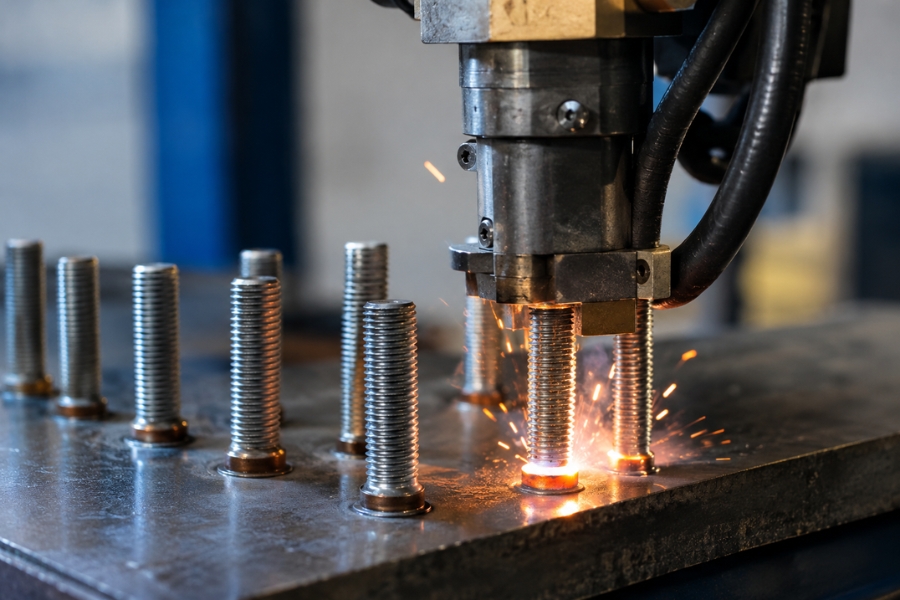
Drawn arc welding uses a controlled electrical arc to melt the end of the stud and a portion of the base material. The equipment then plunges the stud into the molten weld pool and allows the joint to solidify.
Unlike CD welding, drawn arc welding generally suits heavier materials and applications that require deeper, stronger welds. Manufacturers can also use shielding methods, such as ceramic ferrules or shielding gas, depending on the application. Arc Studs can support these demanding fastening applications when manufacturers need reliable welded connections.
Therefore, drawn arc technology can handle applications where material thickness and joint strength require greater heat input.
Common Drawn Arc Applications
Drawn arc processes can support:
- Heavy sheet metal
- Structural brackets
- HVAC equipment frames
- Thick mounting plates
- Industrial enclosures
- Heavy-duty supports
- Components exposed to greater mechanical loads
- Applications requiring deeper weld penetration
Consequently, manufacturers can select drawn arc welding when the base material and fastening requirements demand a more substantial weld.
CD Studs vs. Drawn Arc: Key Differences
Although both methods attach studs directly to metal, their operating characteristics differ. The following comparison highlights the practical differences for HVAC sheet metal production.
| CD Studs | Drawn Arc Welding |
|---|---|
| Uses stored capacitive electrical energy | Uses a controlled welding arc |
| Works especially well with thinner sheet metal | Works well with thicker materials |
| Creates relatively low heat input | Creates higher heat input |
| Helps reduce sheet distortion | Provides deeper weld penetration |
| Supports fast repetitive production | Supports demanding structural applications |
| Often suits small-diameter studs | Supports larger and heavier studs |
| Requires relatively short weld times | Uses a longer welding cycle |
| Works well where backside marking must remain low | Better suited to heavier base materials |
| Commonly supports thin HVAC panels | Commonly supports frames and heavy brackets |
| Provides controlled, localized heat | Provides greater thermal energy |
| Useful for lighter fastening requirements | Useful for higher-load fastening requirements |
| Can support clean cosmetic surfaces | Prioritizes joint strength and penetration |
| Requires suitable surface preparation | Requires suitable weld settings and protection |
| Often fits automated sheet metal lines | Can integrate into industrial welding systems |
| Best choice depends on thin material and stud design | Best choice depends on thickness and load requirements |
In other words, neither process fits every HVAC application. Instead, manufacturers should match the process to the sheet thickness, stud diameter, material type, joint requirements, production volume, and equipment setup.
Choosing the Right Process for HVAC Production
Before selecting a welding process, manufacturers should evaluate several factors.
First, check the base material thickness. Thin sheet metal may benefit from CD welding because the process limits heat exposure. On the other hand, thicker material may require the penetration that drawn arc welding provides.
Next, consider the stud size and application load. A small stud used for a light attachment does not necessarily require the same process as a large stud supporting a heavy bracket.
Also, evaluate production volume. High-volume HVAC manufacturing often requires consistent cycle times and repeatable weld quality. Both methods can support production environments, but the equipment and application requirements determine the most suitable setup.
Finally, review the finished component. If the application requires minimal distortion or a clean appearance, heat input becomes especially important.
Improving Consistency in High-Volume Manufacturing
Consistency plays a major role in HVAC production. Even a strong welding process can produce inconsistent results when operators use incorrect settings, poor surface preparation, or unsuitable studs.
For that reason, manufacturers should maintain consistent material preparation and equipment settings. They should also select studs designed for the chosen welding process.
Northland Fastening Systems can help manufacturers evaluate fastening requirements and identify suitable stud welding options for specific applications. With the right combination of studs, equipment, and process settings, manufacturers can improve repeatability while maintaining production efficiency.
Furthermore, automation can support consistent stud placement across repeated components. Automated systems can control positioning, welding parameters, and cycle timing. This approach helps reduce variation when manufacturers produce large quantities of similar HVAC assemblies.
Build a Reliable HVAC Fastening Process
A successful fastening strategy starts with the application rather than the welding machine alone. Manufacturers should consider the material, stud design, joint strength, production speed, heat sensitivity, and final product requirements together.
CD welding can provide a practical solution for many thin sheet metal applications, while drawn arc welding can support thicker materials and higher-demand joints. By understanding these differences, HVAC manufacturers can create a more efficient and repeatable fastening workflow.
Northland Fastening Systems provides stud welding solutions and expertise for manufacturers that need dependable fastening performance. To discuss your HVAC fastening requirements, contact us today at (651) 730-7770.
Frequently Asked Questions
1. What is stud welding used for in HVAC manufacturing?
Stud welding attaches threaded studs, pins, and other fastening components directly to HVAC sheet metal. It can support panels, brackets, housings, insulation, and equipment assemblies.
2. Are CD studs suitable for thin HVAC sheet metal?
Yes. CD welding often suits thin sheet metal because it uses a short welding cycle and localized heat input. However, manufacturers should confirm compatibility with the specific material and stud design.
3. When should manufacturers use drawn arc welding?
Manufacturers can consider drawn arc welding when they work with thicker materials or applications that require deeper penetration and stronger welded connections.
4. Can stud welding support high-volume HVAC production?
Yes. Stud welding can support repetitive manufacturing because it provides a direct fastening method with consistent placement and repeatable welding parameters.