Grounding Studs for Electrical Enclosures: A Reliable Grounding Solution
Electrical enclosures need dependable grounding connections to support safe and reliable operation. Grounding Studs for Electrical Enclosures provide a practical way to create secure grounding points on metal panels, cabinets, boxes, and other conductive surfaces. At Northland Fastening Systems, we help manufacturers select fastening solutions that support strong electrical connections while also improving production efficiency. When you choose the right stud and welding method, you can create a consistent connection without adding unnecessary installation steps.
Why Grounding Studs Matter in Electrical Enclosures
A properly grounded electrical enclosure can help provide a controlled path for fault current. Therefore, manufacturers must create secure connections between grounding conductors and conductive enclosure surfaces.
Grounding studs offer several advantages:
- They create a dedicated attachment point for grounding conductors.
- They support repeatable production processes.
- They can reduce the need for drilling and tapping.
- They provide strong mechanical attachment when properly welded.
- They work well with automated or high-volume manufacturing.
- They help manufacturers maintain consistent assembly standards.
In addition, welded studs can provide a clean attachment point without requiring access to both sides of the enclosure. This advantage becomes especially useful when manufacturers work with enclosed or difficult-to-reach components.
Choosing the Right Welding Method
The welding process plays an important role in grounding stud performance. Manufacturers should consider the enclosure material, stud diameter, production volume, required strength, and available equipment before selecting a process.
CD Studs for Thin Electrical Panels
Capacitor discharge welding can provide a fast and controlled method for attaching small studs to suitable metal surfaces. CD Studs work particularly well when manufacturers need quick attachment with limited heat input.
Because the process operates rapidly, it can help reduce distortion and support clean production. As a result, manufacturers can maintain enclosure appearance while creating consistent fastening points.
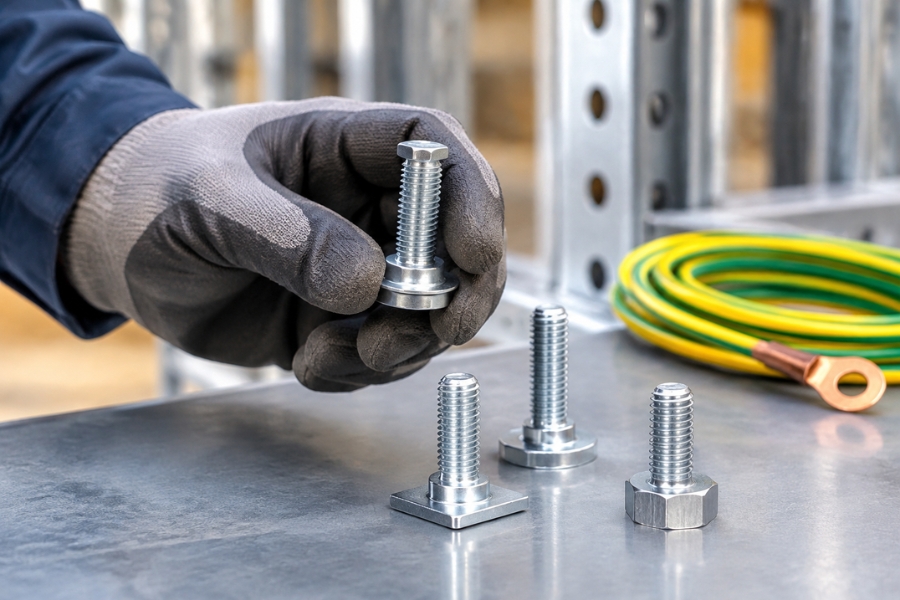
Selecting the Correct Grounding Stud
The right grounding stud depends on more than diameter alone. First, consider the enclosure material and thickness. Then, evaluate the required electrical connection, mechanical loading, weld process, and installation environment.
Manufacturers should also review:
- Stud material and compatibility
- Stud diameter and length
- Surface condition
- Welding equipment
- Production volume
- Required electrical continuity
- Corrosion exposure
- Applicable manufacturing requirements
Additionally, manufacturers should confirm that the finished connection meets their engineering and electrical requirements. A properly selected stud can support both production efficiency and long-term reliability.
Arc Studs for Heavier-Duty Applications
When an application requires a larger or more robust welded fastener, Arc Studs can provide an effective solution. Arc stud welding works well across many industrial applications where manufacturers need strong attachment and reliable weld performance.
The process can support heavier materials and larger stud sizes than some capacitor discharge applications. Therefore, manufacturers can choose arc welding when the enclosure design or grounding requirement calls for a stronger fastening solution.
However, operators should match the stud, weld settings, base material, and equipment carefully. Proper process control helps prevent inconsistent welds and improves production quality.
Improving Production With Stud Welders
Reliable grounding connections also depend on consistent equipment. Stud Welders allow manufacturers to apply controlled welding processes across repeated production cycles.
A suitable stud welding system can help teams:
- Improve weld consistency
- Reduce manual fastening steps
- Increase production speed
- Maintain repeatable positioning
- Reduce secondary fabrication
- Support higher-volume enclosure production
Furthermore, manufacturers can standardize welding parameters and operator procedures to improve repeatability. This approach becomes increasingly valuable when a facility produces large numbers of electrical enclosures with similar grounding requirements.
When Automation Makes Sense
High-volume manufacturers may benefit from Automation when grounding stud installation involves repetitive positioning and welding. Automated systems can help maintain consistent stud placement while reducing manual handling.
Automation can also support production tracking and repeatable process control. However, manufacturers should first establish the correct stud, weld process, and placement requirements. Once the process works reliably in production, automation can provide additional efficiency.
Common Applications for Grounding Studs
Grounding studs can support many electrical and industrial enclosure applications. Manufacturers may use them in:
- Electrical control cabinets
- Metal junction boxes
- Industrial equipment enclosures
- HVAC control systems
- Power distribution equipment
- Switchgear assemblies
- Control panels
- Machinery housings
Each application can require different stud dimensions and welding parameters. Therefore, manufacturers should evaluate the complete assembly rather than selecting a stud based only on appearance or size.
How to Improve Grounding Stud Installation
A successful installation starts with proper preparation. First, verify the base material and enclosure thickness. Next, select a compatible stud and welding process. Then, clean the welding area and follow the equipment manufacturer’s recommended settings.
After welding, inspect the attachment for proper placement and weld quality. Also, verify the finished grounding connection according to the applicable engineering requirements.
By following a consistent process, manufacturers can reduce installation problems and improve production reliability. Northland Fastening Systems can help businesses evaluate stud welding options based on their enclosure design, materials, and production requirements.
Get the Right Stud Welding Solution
Choosing the right grounding stud involves balancing electrical requirements, mechanical performance, material compatibility, and production efficiency. Whether you need capacitor discharge welding, arc welding, or a more automated production approach, the correct solution can improve assembly consistency and long-term performance. Share these useful insights through your Google Business Profile and Facebook to help manufacturers understand their fastening options.
For help selecting the right fastening solution for your electrical enclosure application, contact our team at 651-730-7770. We can help you identify an appropriate stud welding approach for your specific manufacturing requirements.
FAQs
What are grounding studs used for in electrical enclosures?
Grounding studs provide a dedicated attachment point for grounding conductors on conductive electrical enclosure surfaces. Manufacturers can weld the studs directly to suitable metal panels or components.
Can grounding studs be welded to thin electrical panels?
Yes. Suitable capacitor discharge welding applications can attach compatible studs to thin metal panels with controlled heat input. However, manufacturers should verify material thickness and welding compatibility before production.
What is the difference between CD and arc stud welding?
Capacitor discharge welding generally suits smaller studs and thinner materials, while arc stud welding can support larger studs and heavier-duty applications. The appropriate process depends on the material, stud size, thickness, and application requirements.
How do I select the right grounding stud?
Consider the enclosure material, thickness, stud size, welding process, electrical requirements, corrosion exposure, and production volume. A fastening specialist can help you evaluate these factors and select a suitable solution.