Every industrial fabrication team depends on a welding stud supplier who delivers the right products, in the right spec, on time — every order. The wrong supplier creates problems that compound quickly: failed inspections, delayed pours, rework costs, and schedule overruns that ripple through an entire project. However, many teams select a supplier based on price alone and discover the gaps only after a problem occurs on site. This guide gives industrial teams a structured, practical checklist to evaluate any welding stud supplier before committing — so your operation never discovers those gaps at the worst possible moment.
Why Supplier Evaluation Matters More Than You Think
Most industrial teams do not evaluate their welding stud supplier until something goes wrong. A missed certification, a wrong diameter, or a backorder on shear connectors mid-project creates far more cost than any per-unit price saving the supplier offered upfront.
Furthermore, stud welding is a technically specific product category. Stud diameter, material grade, AWS classification, ferrule type, and base material compatibility all interact in ways that a general industrial distributor does not understand deeply. Therefore, your supplier selection is not simply a purchasing decision — it is a quality and risk management decision that affects every project your team runs.
Therefore, a structured evaluation process protects your operation from reactive decisions. Use the checklist below before committing to any new supplier or reviewing your current one.
The 8-Point Welding Stud Supplier Evaluation Checklist
To begin, run every potential supplier through these eight criteria before placing your first structural order.
| Criteria | What to Ask | Why It Matters |
|---|---|---|
| Product Range | Do they stock all stud types—threaded, headed anchors, shear connectors, and weld pins? | A narrow product range forces multiple vendor relationships and increases specification mismatch risk. |
| AWS Compliance | Can they provide AWS D1.1 and D1.5 certifications within 24 hours? | Certified structural projects require verified material documentation. |
| Technical Knowledge | Can they advise on ferrule sizing, stud selection, and process compatibility? | Application errors caught before an order ships can prevent costly rework. |
| Inventory Depth | Do they carry full diameter and length ranges, not just common sizes? | Specification changes often require immediate fulfillment from stocked inventory. |
| Order Accuracy | What is their pick-and-pack error rate on standard orders? | One incorrect diameter or missing item can delay a concrete pour by an entire day. |
| Rush Order Capability | Can they fulfill same-day orders for standard products? | Projects change quickly, so your supplier must respond just as fast. |
| Equipment Support | Do they carry stud welding equipment alongside consumables? | Buying from one supplier reduces compatibility issues and simplifies procurement. |
| Support Accessibility | Do they answer the phone and provide direct technical support? | A supplier who redirects every question to a manual is a catalog vendor—not a true partner. |
A supplier who cannot answer yes to all eight criteria introduces operational risk your team should not accept — regardless of their unit pricing.
Product Range: The First Thing to Verify
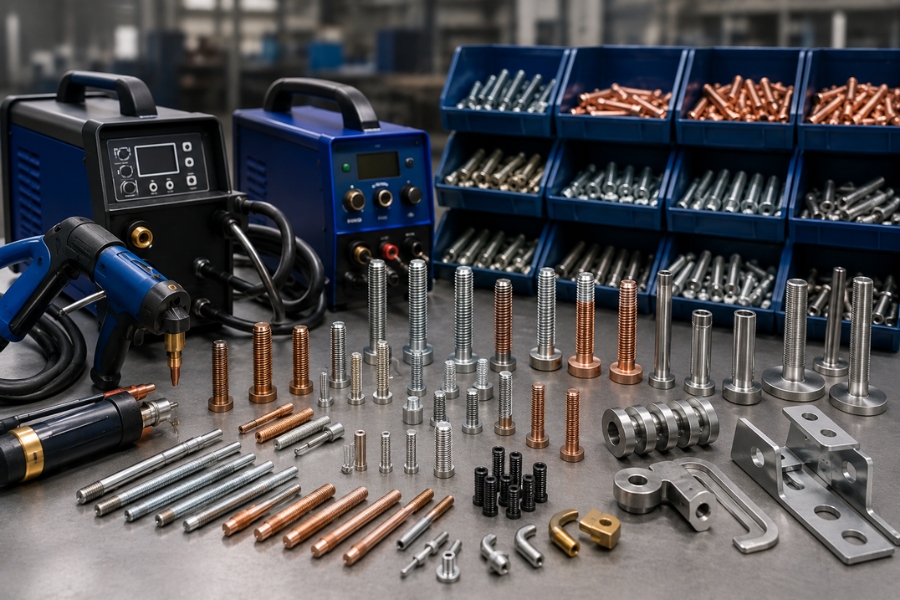
A capable welding stud supplier carries the full spectrum of stud types your operation uses — not just the most common diameters. First, confirm they stock:
Shear connectors in 3/4″ and 7/8″ diameters for composite construction and bridge deck applications. Headed anchors in standard and extended lengths for steel-to-concrete structural connections. Threaded arc studs in the diameter range your drawn arc equipment handles. Non-threaded and specialty studs for construction equipment and industrial manufacturing applications.
In addition, confirm they carry stud welding accessories — ceramic ferrules, chucks, collet inserts, cable connectors, and spark shields — all matched to the stud types they sell. A supplier who stocks studs but cannot supply the compatible accessories creates a sourcing gap your team will feel on the first job.
Furthermore, their stock must cover stainless steel and aluminum grades alongside mild steel. Sheet metal fabrication, food service equipment manufacturing, and electrical enclosure production all require stainless or aluminum stud types. A supplier limited to mild steel carbon products cannot serve your full operation.
AWS Certification Documentation: Non-Negotiable for Structural Work
Every structural stud welding application requires materials that meet AWS D1.1. Bridge applications require AWS D1.5. Consequently, your welding stud supplier must treat certification documentation as a standard deliverable — not a special request that takes a week to process.
Next, ask any potential supplier directly: “Can you provide a material test report confirming AWS compliance within 24 hours of my request?” If the answer involves hesitation, an escalation process, or a timeline longer than 24 hours, that supplier is not set up to support certified structural work.
Material certifications protect your project during inspection and also safeguard your company in the event of a structural failure investigation. Northland Fastening Systems understands the importance of timely documentation and dependable product support, helping customers maintain compliance while keeping projects on schedule.
Technical Knowledge: The Difference Between a Supplier and a Partner
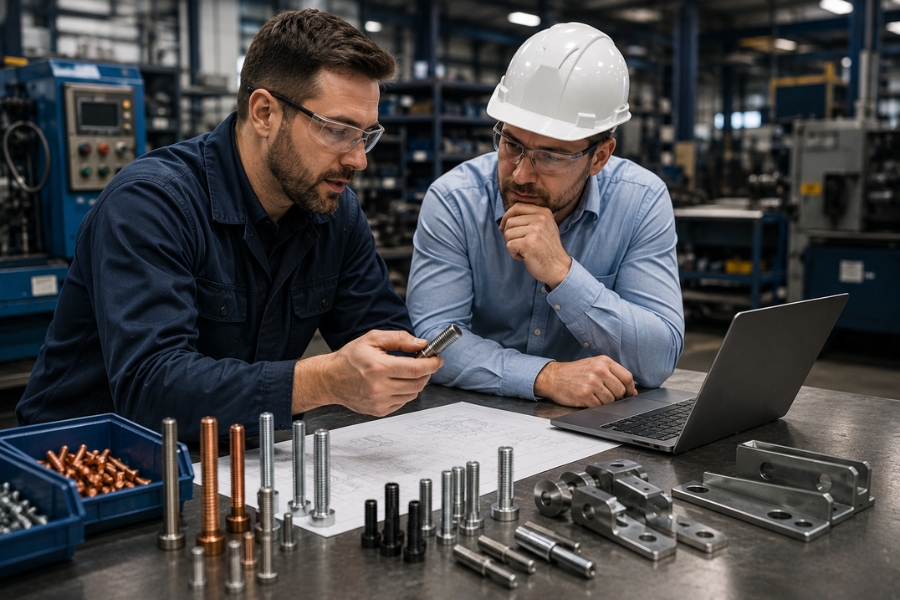
The most overlooked criterion in supplier selection is technical knowledge. Many welding supply distributors sell studs the same way they sell fasteners — from a catalog, without application-specific expertise.
A true welding stud supplier understands the drawn arc process, the relationship between stud diameter and base material thickness, ferrule selection by application type, and how equipment brand affects accessory compatibility. As a result, when your team calls with a question about which shear connector length suits a specific deck profile, a knowledgeable supplier answers accurately in one call.
Likewise, ask your potential supplier to walk you through a stud selection scenario. Present your base material, application, and stud diameter. If they answer confidently and correctly, they have genuine product expertise. If they ask you to call the manufacturer, you have found a catalog reseller who cannot support your team when it matters most.
Read also: How to Choose a Reliable Arc Stud Supplier for Your Industrial Projects
Equipment and Rentals: Why Same-Source Procurement Reduces Risk
The strongest welding stud suppliers carry both consumables and equipment. Sourcing studs, accessories, and equipment from one supplier eliminates compatibility mismatches that occur when different sources ship products that do not integrate cleanly.
Moreover, a supplier who offers rentals alongside purchases gives your operation genuine flexibility. When a large project scales up unexpectedly, renting additional equipment from your existing supplier — who already knows your stud types and accessory requirements — is faster and lower risk than sourcing from an unfamiliar equipment vendor.
Finally, ask any supplier whether they offer equipment rental programs and whether their rental machines come pre-configured for your stud specifications. The answer tells you whether they operate as a full-service stud welding partner or simply as a product distributor.
Why Northland Fastening Systems Meets Every Criterion on This Checklist
Northland Fastening Systems has served industrial fabrication teams, structural steel contractors, and construction manufacturers from Woodbury, Minnesota since 1987. We carry the complete range of stud types, stud welding accessories, ceramic ferrules, and arc accessories — all in multiple diameters and lengths, with AWS D1.1 and D1.5 certification documentation available on every structural order.
In addition, our team answers application questions directly, confirms specifications before orders ship, and provides same-day fulfillment on standard products. We offer stud welding equipment for both purchase and rentals, so your operation scales up on large programs without additional vendor relationships or compatibility risks.
Call our team at 651-730-7770 to speak with a product specialist today. Run us through your checklist — we are confident in every answer.
Frequently Asked Questions
Q1: What is the most important criterion when selecting a welding stud supplier?
AWS certification documentation is the most critical criterion for structural and bridge work. A supplier who cannot provide compliance documentation quickly puts your inspection results and project timeline at risk on every certified structural job.
Q2: How do I know if a welding stud supplier has genuine technical knowledge?
Ask them to walk through a stud selection scenario for your application. A knowledgeable supplier answers accurately in one call. A catalog reseller asks you to contact the manufacturer or provides a generic recommendation without confirming your base material and application details.
Q3: Why does sourcing studs and equipment from the same supplier reduce risk?
Same-source procurement eliminates compatibility mismatches between stud types, ferrules, chucks, and equipment. It also simplifies rush orders and technical support — your supplier already knows your full setup and can respond accurately without requiring a detailed briefing on every call.
Q4: What product range should a full-service welding stud supplier carry?
A full-service supplier stocks shear connectors, headed anchors, threaded arc studs, weld pins, stainless and aluminum grades, ceramic ferrules, chucks, and arc accessories — all in multiple diameters and lengths, with AWS-compliant documentation available on request for structural products.