Choosing between Headed Anchors vs. Shear Connectors can directly impact the strength, stability, and success of your construction project. Both components play a critical role in steel-to-concrete applications, but they serve different purposes depending on design requirements.
Understanding Headed Anchors vs. Shear Connectors helps engineers, contractors, and fabricators make informed decisions that improve structural integrity and long-term performance. Whether you’re working on commercial construction or industrial fabrication, selecting the right fastening solution is essential.
What Are Headed Anchors?
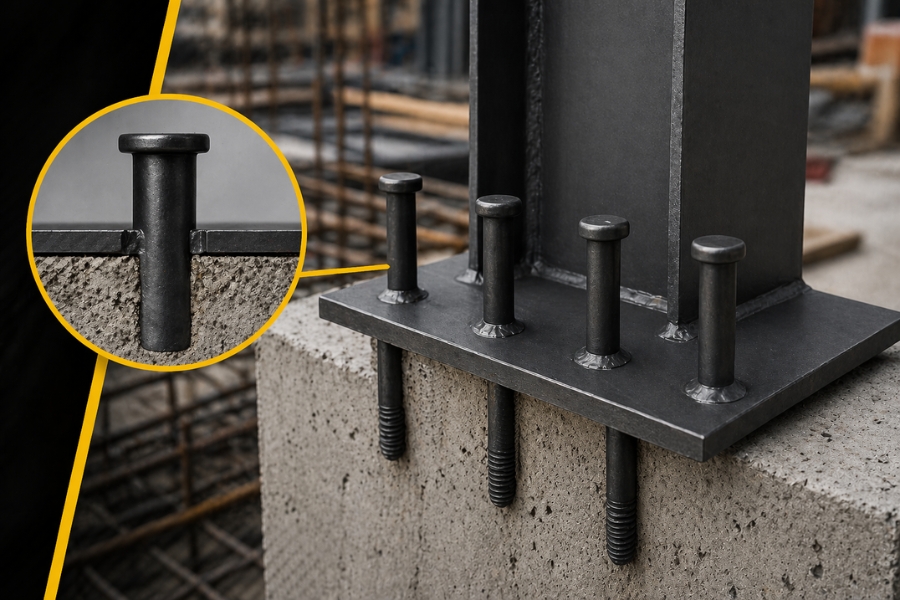
Headed anchors are fastening elements designed to secure steel components into concrete. They typically feature a head that provides resistance against pull-out forces, ensuring a strong mechanical bond, especially when used alongside CD Weld Pins.
These anchors are commonly used in:
- Concrete embedment applications
- Structural connections
- Precast and cast-in-place systems
Because of their design, headed anchors provide excellent load distribution and are ideal where tensile strength is required.
What Are Shear Connectors?
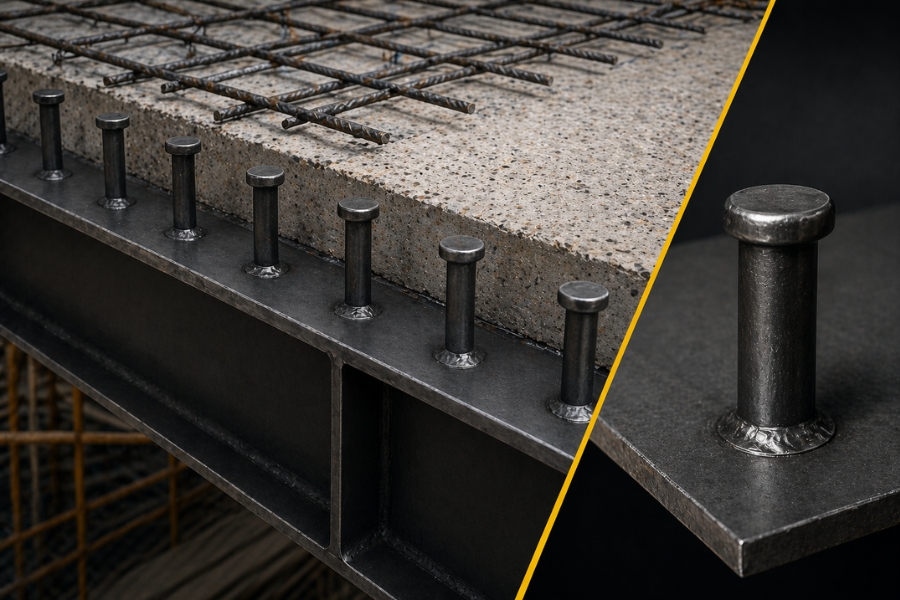
Shear connectors are primarily used to transfer shear forces between steel and concrete. They create composite action, allowing both materials to work together under load.
You’ll often find shear connectors in:
- Composite floor systems
- Bridge construction
- Steel beam reinforcement
They improve load-sharing capability and enhance the overall durability of a structure.
Headed Anchors vs. Shear Connectors: Key Differences
When comparing Headed Anchors vs. Shear Connectors, the main difference lies in their function and application.
- Headed anchors resist tension and secure embedded components
- Shear connectors transfer horizontal forces between materials
- Anchors focus on stability, while connectors improve load distribution
Additionally, project requirements such as load type, environment, and design specifications, along with the level of Automation, will influence your choice.
When Should You Use Headed Anchors?
Headed anchors are best suited for applications where strong anchorage is required.
Use them when:
- Embedding steel into concrete
- Supporting vertical loads
- Ensuring resistance against pull-out forces
Moreover, they are widely used in heavy-duty construction where reliability is critical.
When Should You Use Shear Connectors?
Shear connectors are ideal when you need composite action between materials.
Use them when:
- Connecting steel beams with concrete slabs
- Enhancing structural performance
- Distributing shear loads effectively
In addition, they help reduce structural movement and improve overall system efficiency.
Read more : Best Cable and Welding Gear Management for Job Site Safety
Factors to Consider Before Choosing
Before deciding between Headed Anchors vs. Shear Connectors, consider these important factors:
- Type of load (tension vs. shear)
- Project design and specifications
- Material compatibility
- Environmental conditions
Furthermore, selecting the right component ensures long-term durability and reduces maintenance issues.
Choosing the Right Solution for Your Project
Every project is unique, and selecting the right fastening system requires a clear understanding of your requirements.
At this stage, working with experienced professionals can make a significant difference. Northland Fastening Systems provides reliable fastening solutions tailored to different industries and applications. Their expertise ensures that you choose the right components for optimal performance.
Why Quality Fastening Systems Matter
Using high-quality fastening components improves safety, performance, and efficiency. Poor-quality materials can lead to structural failures and costly repairs.
Therefore, investing in the right solutions not only enhances reliability but also supports long-term project success.
Get Expert Support from Northland Fastening Systems
Choosing between Headed Anchors vs. Shear Connectors becomes easier when you have the right guidance. Our team offers industry expertise and dependable solutions for a wide range of applications.
If you need help selecting the right fastening system for your project, request expert assistance today or call (651) 730-7770 to speak directly with a specialist. You can also connect with us through our Google Business Profile and Facebook for updates and support.
FAQs
Q1. What is the main difference between headed anchors and shear connectors?
Headed anchors are used for resisting tensile forces, while shear connectors are designed to transfer shear forces between steel and concrete.
Q2. Can headed anchors and shear connectors be used together?
Yes, in some structural designs both components are used together to handle different types of loads effectively.
Q3. Which is better for composite construction?
Shear connectors are generally preferred for composite construction as they enable steel and concrete to act as a single unit.
Q4. How do I choose the right option for my project?
Consider load type, design requirements, and material compatibility. Consulting with experts ensures the best selection.