Galvanized steel offers strong corrosion resistance, but its zinc coating can create challenges during welding. Northland Fastening Systems helps contractors and fabricators choose suitable fastening methods for different steel applications. When you perform Stud Welding on Galvanized Steel, you need to consider the coating thickness, stud type, welding process, surface condition, and required weld strength. With the right process and equipment, you can create reliable connections while maintaining consistent production quality. Understanding these factors also helps you reduce weld defects, improve productivity, and achieve more predictable results across galvanized steel projects.
Why Galvanized Steel Requires Careful Stud Welding
Galvanized steel contains a protective zinc coating that helps prevent corrosion. However, that same coating affects the welding process because the zinc sits between the welding equipment and the underlying steel.
During welding, the intense heat can vaporize or disturb the zinc near the weld area. As a result, the process can produce fumes, spatter, porosity, or inconsistent weld characteristics when you do not control the conditions properly.
Therefore, operators should select the welding process according to the material thickness, coating condition, stud diameter, and application requirements. Proper ventilation and appropriate safety practices also remain essential whenever welding galvanized materials.
Choosing the Right Stud Welding Process
Different applications require different approaches. Before production begins, evaluate the galvanized surface and determine how the coating will interact with the selected welding method.
CD Studs for Controlled Applications
CD Studs work well for many thin-gauge and sheet-metal applications. Capacitor discharge welding delivers energy rapidly, which can limit the overall heat input and help protect the surrounding material.
However, surface condition still matters. Operators should ensure that the welding location provides adequate contact between the stud, welding tool, and base material. Excessive coating, contamination, oil, or debris can interfere with consistent results.
For that reason, always verify the manufacturer’s recommended settings and perform test welds before starting a larger production run.
Understanding Surface Preparation
Surface preparation plays an important role in weld consistency. Although galvanized steel does not always require complete removal of the zinc coating, the operator must understand how the coating affects the selected process.
Clean the welding area and remove contaminants that could interfere with electrical contact. Depending on the application and welding method, you may also need to remove or reduce the coating around the weld location.
In addition, maintain consistent material positioning throughout production. Small changes in contact, pressure, or alignment can affect the finished weld.
Arc Studs and Heavier Applications
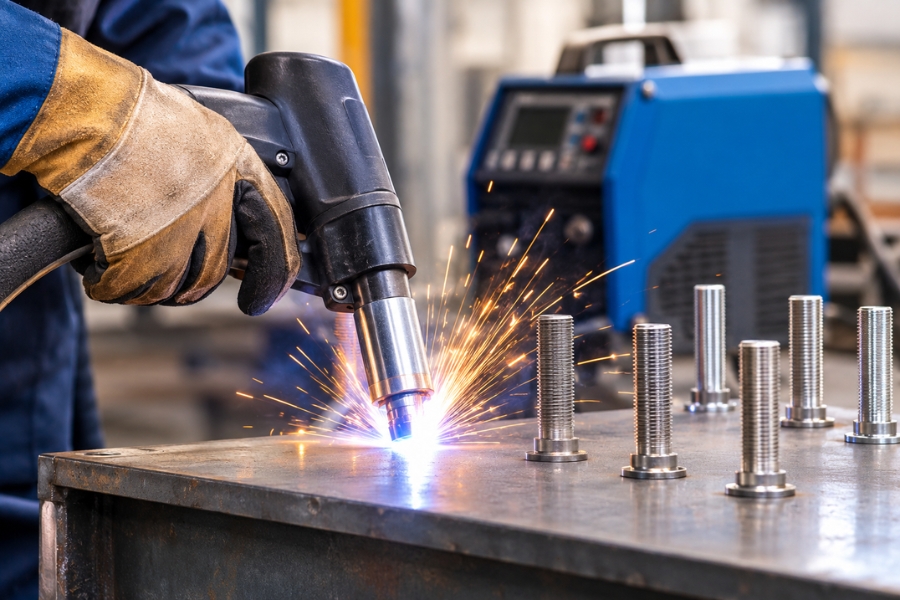
Arc Studs can provide a practical solution when applications require larger studs, deeper penetration, or higher fastening capacity. Arc stud welding creates a weld pool that joins the stud to the base material.
Because this process generates greater heat, galvanized coatings require additional attention. Zinc vaporization can affect the welding environment and may influence weld quality if the operator does not control the process correctly.
Consequently, operators should use suitable ventilation, follow equipment guidelines, and establish tested welding parameters for the specific galvanized material.
Managing Weld Quality During Production
Consistent results depend on more than simply selecting the correct stud. Operators should monitor several factors throughout production.
First, check the base material for contamination, excessive coating buildup, or surface damage. Next, confirm the welding equipment operates within the recommended parameters. Then, maintain consistent stud placement and tool alignment.
After welding, inspect representative connections for proper fusion and physical integrity. Visual inspection can identify obvious issues, while destructive or non-destructive testing may provide additional confirmation when the application requires it.
These checks become especially valuable during high-volume production because they help identify process changes before they affect a large number of finished components.
Selecting Suitable Stud Welding Accessories
The right Stud Welding Accessories can also improve process consistency. Welding guns, cables, chucks, ferrules, and other components should match the selected equipment and stud application.
Furthermore, inspect accessories regularly for wear or damage. Worn components can affect positioning, electrical contact, or welding performance.
A consistent maintenance routine helps keep the welding system operating reliably. It also allows operators to identify equipment problems before they create recurring weld-quality issues.
Following Reliable Stud Welding Processes
Established Stud Welding Processes help operators maintain repeatable results across different galvanized steel applications. Start by identifying the material and coating characteristics. Then select the appropriate stud, equipment, and welding parameters.
Next, perform sample welds and inspect the results before moving into full production. If the weld does not meet the required standard, adjust the process and test again.
This approach creates a controlled workflow instead of relying on trial and error. As a result, manufacturers can improve consistency, reduce rework, and maintain dependable fastening performance.
Get Reliable Guidance for Galvanized Steel Applications
Choosing the right equipment and welding method can make a significant difference when you work with coated steel. Northland Fastening Systems can help you evaluate your application and identify suitable stud welding solutions. For assistance with equipment, studs, accessories, or process selection, call 651-730-7770 to discuss your project requirements.
FAQs About Stud Welding on Galvanized Steel
Can you stud weld galvanized steel?
Yes. You can stud weld galvanized steel when you select a suitable process and account for the zinc coating. Proper surface preparation, welding parameters, ventilation, and testing can help produce reliable connections.
Does galvanizing affect stud welding?
Yes. The zinc coating can affect electrical contact, heat transfer, weld consistency, and fume generation. Therefore, operators should consider coating thickness and surface condition when selecting the welding process.
Should galvanized steel be prepared before stud welding?
In many applications, the welding area should remain clean and free from oil, dirt, moisture, and other contaminants. Depending on the welding process and coating condition, additional preparation may improve weld consistency.
How do you maintain consistent weld quality?
Use the correct equipment and parameters, maintain clean surfaces, position studs accurately, inspect equipment regularly, and test representative welds. These steps help operators identify problems early and maintain consistent production quality.