Choosing the correct Weld Stud Diameter and Length can directly affect the strength, stability, and performance of an industrial fastening application. At Northland Fastening Systems, we understand that even a small difference in stud size can influence weld quality, load capacity, and installation efficiency. Therefore, manufacturers and fabricators should evaluate the application carefully before selecting a weld stud.
The right choice depends on several factors, including the base material, material thickness, required load, weld method, stud configuration, and installation conditions. By considering these factors together, you can select a stud that provides reliable performance without adding unnecessary material or cost.
Start With the Required Load and Application
First, determine what the weld stud needs to accomplish. Different applications place different demands on a fastener. For example, some studs primarily secure components, while others must withstand significant tensile, shear, or vibration loads.
A larger diameter generally provides a greater cross-sectional area and can support higher loads. However, bigger does not automatically mean better. An oversized stud can require more welding energy and may not suit the thickness or properties of the base material.
Consequently, engineers should identify the expected working load and safety requirements before choosing a diameter. Also consider whether the assembly will experience vibration, repeated loading, impact, or thermal cycling. These conditions can influence the appropriate stud size and overall fastening design.
Consider Base Material and Thickness
Next, evaluate the material receiving the weld stud. Steel, stainless steel, aluminum, and other materials can require different welding parameters and stud configurations.
Base material thickness also plays an important role. A thin sheet may not support the same welding conditions as a heavier structural component. Therefore, the stud diameter should complement the thickness and strength of the base material.
In addition, consider what happens behind the material. If the stud installation occurs on a thin panel, excessive heat can create distortion or affect the surrounding area. A properly matched stud helps maintain weld integrity while reducing unnecessary heat input.
Match the Stud to the Stud Welding Process
The selected Stud Welding Process should also influence your choice. Different welding methods provide different levels of control over heat, timing, penetration, and installation speed.
Capacitor discharge applications often work well for thinner materials and fast installation requirements. Meanwhile, arc-based applications can support larger studs and applications that require deeper weld penetration.
Before production begins, verify that the stud diameter, length, material, and weld base configuration match the equipment and parameters. This step helps prevent weak welds, excessive penetration, surface damage, and inconsistent results.
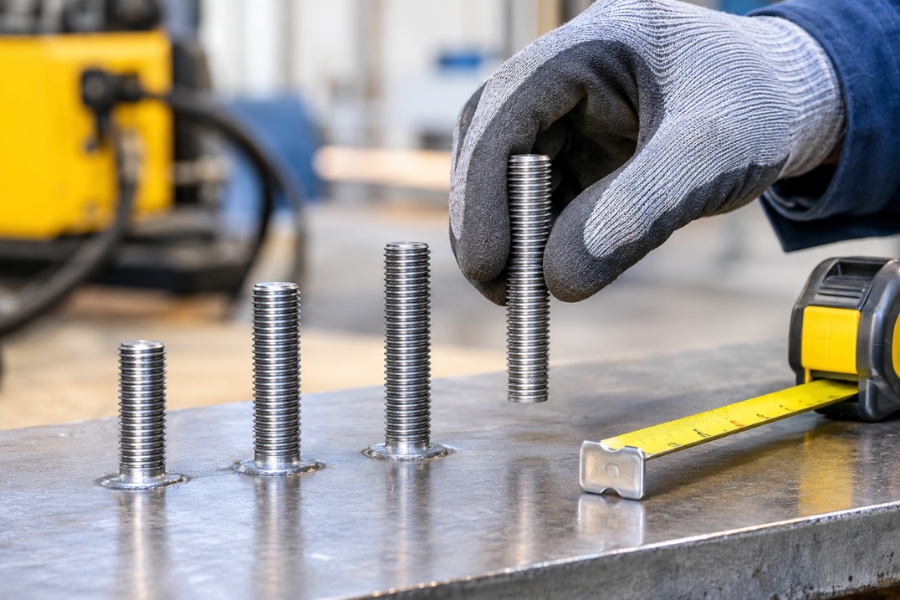
Choose the Correct Stud Length
Diameter determines much of the stud’s load-bearing capability, but length determines how the fastener fits into the finished assembly.
Start by identifying the total thickness of the materials that the stud must pass through. Then account for washers, brackets, insulation, coatings, or other components that may sit between the stud and the attached part.
The finished stud should provide enough exposed thread or usable length for secure attachment. However, excessive length can interfere with surrounding components or create clearance problems.
For that reason, calculate the required grip length before ordering production quantities. A small amount of planning at this stage can prevent costly modifications later.
Select Stud Welders and Accessories That Match the Job
Your equipment also matters. Stud Welders must provide suitable welding current, timing, and control for the selected stud size and material.
Additionally, the right Stud Welding Accessories can improve setup consistency and operator efficiency. Collets, chucks, ferrules, positioning equipment, and other components should match the stud and welding system.
Before starting a production run, confirm that the equipment manufacturer supports the selected stud diameter. Also verify that the tooling can securely hold and position the stud throughout the welding cycle.
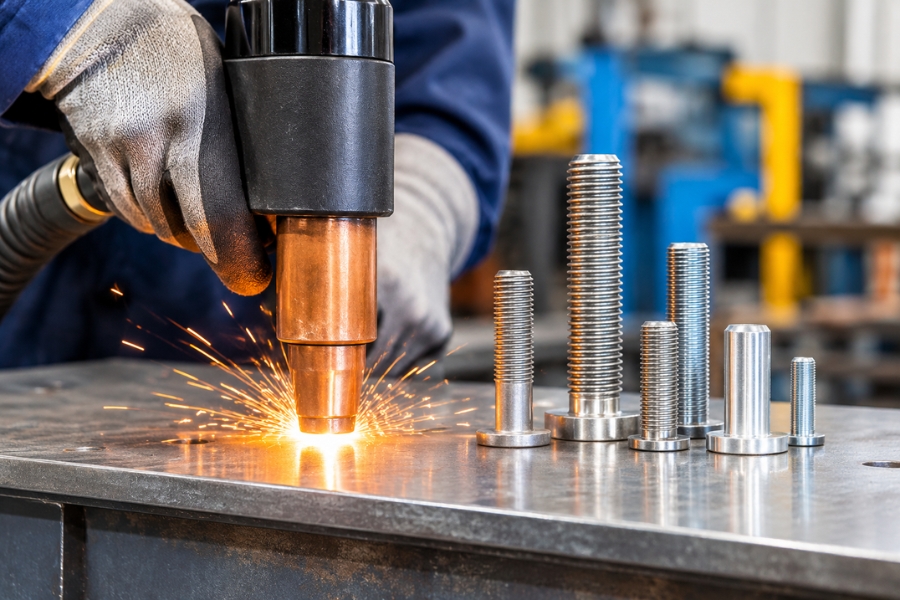
Match Diameter to Stud Type and Welding Method
Different stud designs can serve different industrial requirements. For example, CD Studs commonly support applications where fast attachment and controlled heat input matter. Their diameter and length should still match the material thickness, required strength, and equipment capabilities.
On the other hand, applications that require greater weld penetration or larger fastening components may call for a different stud design. Therefore, avoid selecting a stud based only on its physical dimensions. Consider the complete combination of stud type, base material, welding method, equipment, and application requirements.
Account for Thread and Assembly Requirements
Finally, consider how the finished stud will connect to the component being installed. Thread size, thread length, nut engagement, washer requirements, and available clearance can all affect the final selection.
A stud may have the correct diameter and overall length but still fail to provide enough usable thread for the intended assembly. Conversely, excessive thread length can create interference with nearby parts.
As a result, review the complete assembly rather than evaluating the weld stud independently. This approach helps ensure that the fastening system performs correctly after installation.
When to Consider Arc Studs
Heavy-duty applications may require Arc Studs when engineers need stronger weld penetration and greater flexibility with larger stud sizes. These studs can suit structural, industrial, fabrication, and equipment applications where the fastening system must withstand demanding conditions.
However, the correct selection still depends on the base material, thickness, required load, stud diameter, and welding parameters. Testing and qualification can help confirm that the selected combination delivers the required performance before full-scale production.
Get Help Choosing the Right Weld Stud
Selecting the correct Weld Stud Diameter and Length requires more than simply matching a stud to a hole or bracket. You should consider load requirements, material thickness, stud type, welding method, equipment, thread engagement, and the complete assembly design.
If you need help selecting the right fastening solution for your application, Northland Fastening Systems can help you evaluate your requirements and identify suitable stud welding options. Contact us at 651-730-7770 to discuss your industrial fastening needs.
FAQs
What determines the correct weld stud diameter?
The required load, base material, material thickness, welding method, and application conditions all influence the appropriate stud diameter. Engineers should consider these factors together rather than choosing a diameter based solely on size.
How do I determine the correct weld stud length?
Calculate the total material and component thickness the stud must accommodate, then allow enough usable thread for secure attachment. Also check for washers, coatings, brackets, and clearance requirements.
Does base material thickness affect stud selection?
Yes. Thin materials can require different stud sizes and welding parameters than thicker structural materials. The stud should complement the material thickness while providing adequate weld strength.
Should I test weld stud selection before production?
Yes. Testing can help confirm weld quality, strength, equipment compatibility, and installation consistency. For demanding applications, qualification testing can reduce the risk of production failures and costly rework.