Manufacturers need fastening methods that support speed, strength, and consistent results across every production run. Stud Welding for Metal Furniture Manufacturing provides a practical way to attach threaded studs, pins, and other fasteners directly to metal components. Unlike traditional mechanical fastening, stud welding can create secure connections without drilling holes or adding separate nuts and bolts. Northland Fastening Systems helps manufacturers evaluate stud welding solutions that fit their materials, production volume, and fastening requirements.
Why Stud Welding Works Well for Metal Furniture
Metal furniture often combines frames, brackets, panels, supports, and mounting points. Each component requires reliable fastening, but manufacturers also need to control production time and labor costs. Northland Fastening Systems provides stud welding solutions that help manufacturers address these assembly requirements.
Stud welding attaches a fastener directly to the workpiece, creating a strong connection while reducing the number of separate assembly steps.
For example, manufacturers can weld studs to:
- Metal chair and table frames
- Office furniture components
- Storage cabinets
- Shelving systems
- Metal desks
- Display fixtures
- Commercial furniture assemblies
Additionally, the process keeps the opposite side of the material relatively clean because the manufacturer does not need to drill completely through the workpiece.
Choosing the Right Stud Welding Process
The material thickness, fastener type, production volume, and required connection strength all influence the fastening method. Therefore, manufacturers should evaluate the application before selecting equipment or consumables.
Capacitor discharge welding can work particularly well when manufacturers need fast attachment with limited heat input. The process can also support applications where surface appearance matters.
Arc welding provides another option for applications that require deeper weld penetration and strong connections. Manufacturers can select the appropriate approach based on the metal type, thickness, stud diameter, and design requirements.
Furthermore, manufacturers should consider how easily the selected process integrates into their existing production workflow. A technically suitable method may still create production challenges if it requires excessive setup, manual handling, or frequent adjustments.
Using CD Studs for Fast Production
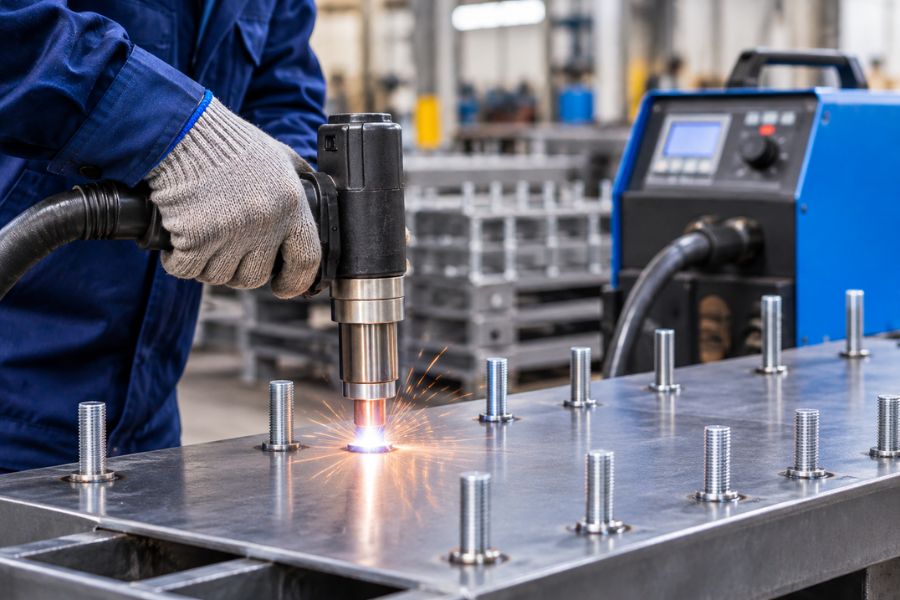
CD Studs can support high-volume furniture production because the capacitor discharge process creates a fast weld cycle. The process can attach a stud in a fraction of a second, which helps manufacturers maintain efficient assembly lines.
This speed becomes especially valuable when a furniture component requires dozens or hundreds of attachment points. Instead of drilling holes and installing mechanical hardware individually, operators can position the stud and complete the weld quickly.
Moreover, CD welding can minimize heat transfer into thin materials. As a result, manufacturers can reduce the risk of distortion or excessive heat-related marks on suitable applications.
However, manufacturers still need to match the stud, equipment settings, and base material correctly. Proper setup helps maintain consistent weld quality throughout production.
How Stud Welders Support Consistent Assembly
Production consistency matters just as much as welding speed. Stud Welders give operators controlled equipment for positioning and attaching fasteners with repeatable results.
Manufacturers should evaluate equipment based on several factors, including:
- Required weld cycle time
- Stud diameter and length
- Material type and thickness
- Available electrical power
- Manual or automated production
- Required production volume
- Operator experience
A suitable machine can simplify production and reduce variation between operators. In addition, manufacturers can establish standard operating procedures for positioning, surface preparation, equipment settings, and inspection.
These practices help production teams maintain consistent fastening quality as order volumes increase.
Designing Furniture Around the Fastening Method
Manufacturers can also improve efficiency by considering stud welding during the product design stage. Designers should identify fastening locations early and confirm that operators or automated equipment can access those areas.
For example, a component may require studs close to a bend, edge, or enclosed section. If the welding tool cannot reach the required location easily, production may require additional handling or secondary fastening.
Therefore, designers and production engineers should review accessibility before finalizing the component.
They should also consider stud placement, weld clearance, material thickness, and assembly sequence. This approach can prevent unnecessary production changes later.
Improving Production With the Right Fastening Strategy
Stud welding can reduce several steps associated with conventional mechanical fastening. However, manufacturers should evaluate the complete production process rather than focusing only on welding speed.
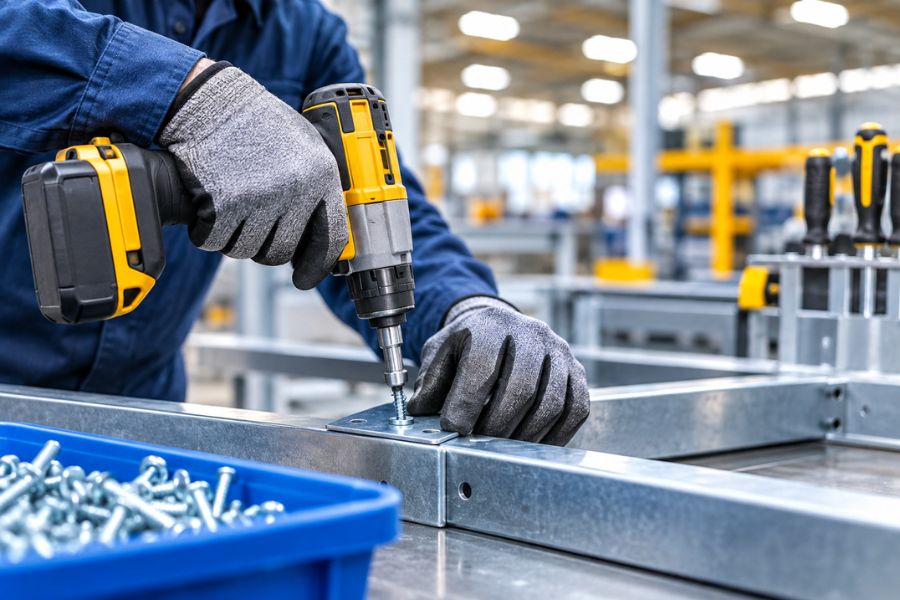
For instance, eliminating drilling can reduce preparation work. Removing nuts and washers can simplify inventory management. Faster attachment can also reduce manual assembly time.
At the same time, quality control remains essential. Operators should inspect welds according to the application’s requirements and verify that the fastener remains secure under expected loads.
Manufacturers can also track cycle times, defect rates, equipment downtime, and operator productivity. These measurements help identify opportunities to improve the fastening process further.
Selecting Equipment and Support for Your Application
Every furniture manufacturing operation has different production requirements. A small custom manufacturer may need flexible manual equipment, while a high-volume facility may benefit from a more streamlined production setup. Sharing these equipment selection insights on your Google Business Profile and Facebook can help manufacturers understand their fastening options.
Manufacturers should therefore evaluate equipment based on the actual application instead of choosing a system solely because it offers a high output rate.
They should consider consumable availability, technical support, equipment maintenance, operator training, and future production needs as well. A complete evaluation can help manufacturers select a fastening solution that supports both current projects and future growth.
For assistance with stud welding equipment, consumables, and application requirements, call 651-730-7770 to discuss your metal furniture fastening needs with the team.
Frequently Asked Questions
1. Is stud welding suitable for metal furniture manufacturing?
Yes. Stud welding can work well for metal furniture components that require secure, repeatable fastener attachment. Manufacturers can use the process for frames, brackets, panels, cabinets, shelving, and other metal assemblies.
2. Does stud welding eliminate drilling?
In many applications, yes. Stud welding attaches the fastener directly to the metal surface, so manufacturers may avoid drilling through the material for certain fastening requirements.
3. How do manufacturers choose between CD and arc welding?
The best option depends on factors such as material thickness, stud size, required weld characteristics, production volume, and heat input requirements. Manufacturers should evaluate the complete application before selecting a process.
4. Can stud welding support high-volume furniture production?
Yes. The fast weld cycle and repeatable attachment method can make stud welding suitable for high-volume manufacturing. Proper equipment selection, operator training, and process control can further improve production consistency.